30 Japandi Bedroom Ideas That Feel Calm, Warm & Minimal (2026 Guide)
Creating a calm, clutter-free bedroom that still feels warm and elevated is exactly why Japandi design has taken over Pinterest. If you’re searching for Japandi Bedroom Ideas, you’re likely craving a space that feels peaceful, intentional, and beautifully minimal without being cold. This style blends Japanese simplicity with Scandinavian comfort, resulting in rooms that feel both grounded and refined. The ideas below are designed to spark inspiration while helping you create a bedroom that feels like a true retreat.
1. Low Platform Bed with Natural Oak Frame
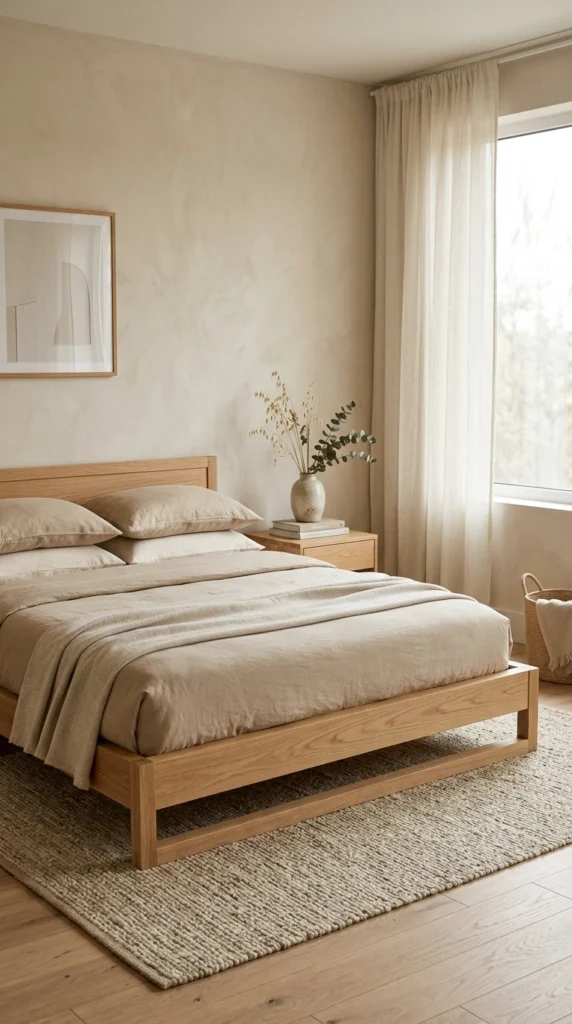
A modern Japandi bedroom begins with a low platform bed crafted from light oak, sitting close to the floor to create a grounded, calming atmosphere. The room features soft beige walls, linen bedding in warm neutrals, and a single ceramic vase placed intentionally on a minimal nightstand. Natural light flows through sheer curtains, highlighting the clean lines and organic textures that define this serene setup.
This works because the low-profile bed visually expands the space while reinforcing the minimalist Japandi bedroom aesthetic. Choose bedding in soft taupe or off-white to maintain warmth, and avoid bulky furniture that disrupts flow. For added depth, layer a subtle woven rug beneath the bed and keep decor minimal to preserve that calm bedroom aesthetic.
2. Soft Neutral Layered Bedding Look
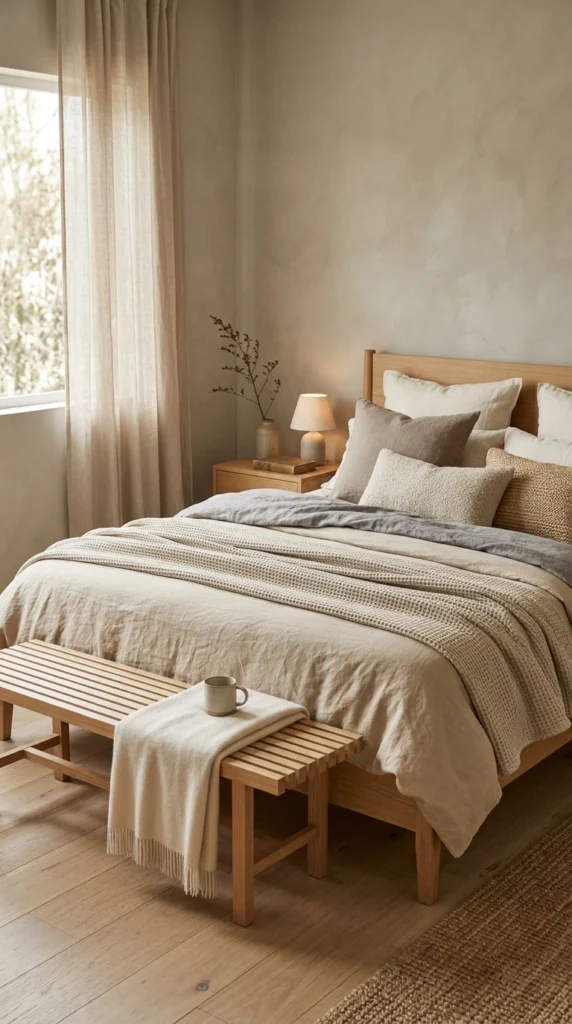
A cozy Japandi bedroom comes alive through thoughtfully layered bedding in shades of cream, sand, and muted gray. The bed becomes the focal point with linen duvets, cotton throws, and textured pillows arranged in a relaxed yet intentional way. A wooden bench at the foot adds function without cluttering the space.
This approach works because it introduces softness into minimalist bedroom ideas without overwhelming the design. Stick to a neutral Japandi bedroom color palette and mix textures instead of colors. Add one darker accent pillow for contrast and keep the rest cohesive to maintain that warm minimal bedroom feel.
3. Paper Lantern Lighting for Soft Glow
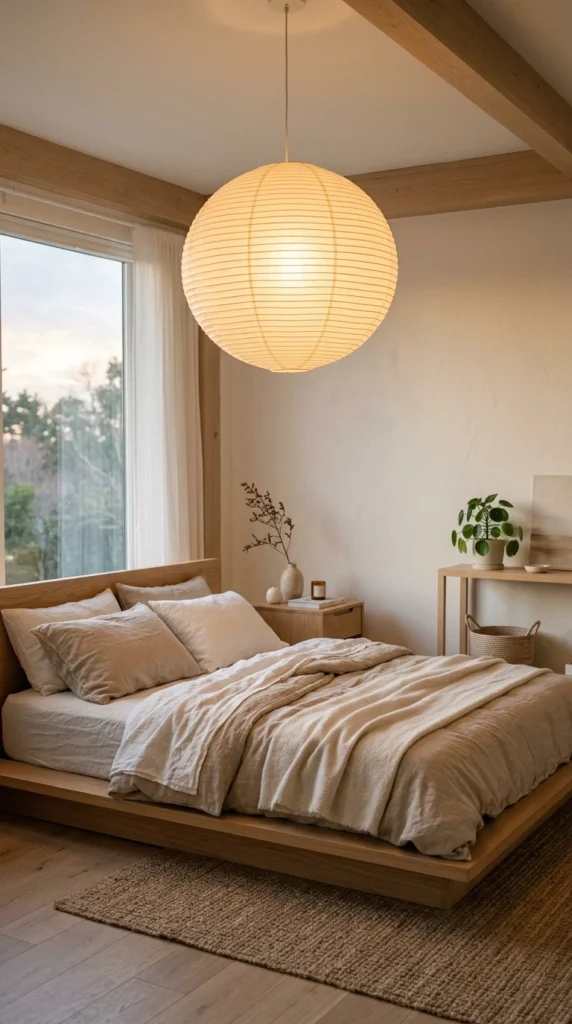
A Japandi style bedroom instantly feels more serene with paper lantern lighting suspended above the bedside. The soft, diffused glow creates a peaceful ambiance that replaces harsh overhead lights. Paired with light wood furniture and uncluttered surfaces, the room feels calm and intentional.
Lighting plays a major role in Japandi bedroom design, and this setup enhances relaxation while elevating the aesthetic. Use warm-toned bulbs and position lighting at different heights for depth. Combine with natural textures like linen curtains and a woven rug to create a cozy minimalist bedroom atmosphere.
4. Minimal Wall Art with Organic Shapes
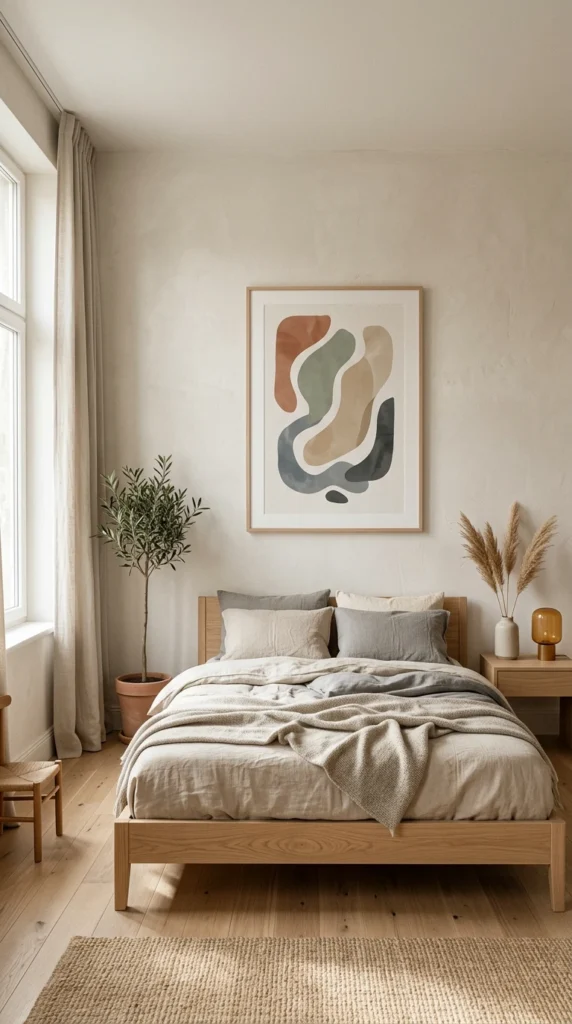
A Japandi aesthetic bedroom embraces simplicity through carefully chosen wall decor, such as abstract art with organic lines or muted landscapes. The walls remain mostly bare, allowing one or two pieces to stand out against soft neutral tones.
This works because it avoids visual clutter while still adding personality to the space. Choose artwork in earthy tones like clay, charcoal, or sand, and use thin wooden frames. Position art at eye level and leave surrounding space empty to maintain a decluttered bedroom design.
5. Small Japandi Bedroom with Smart Layout
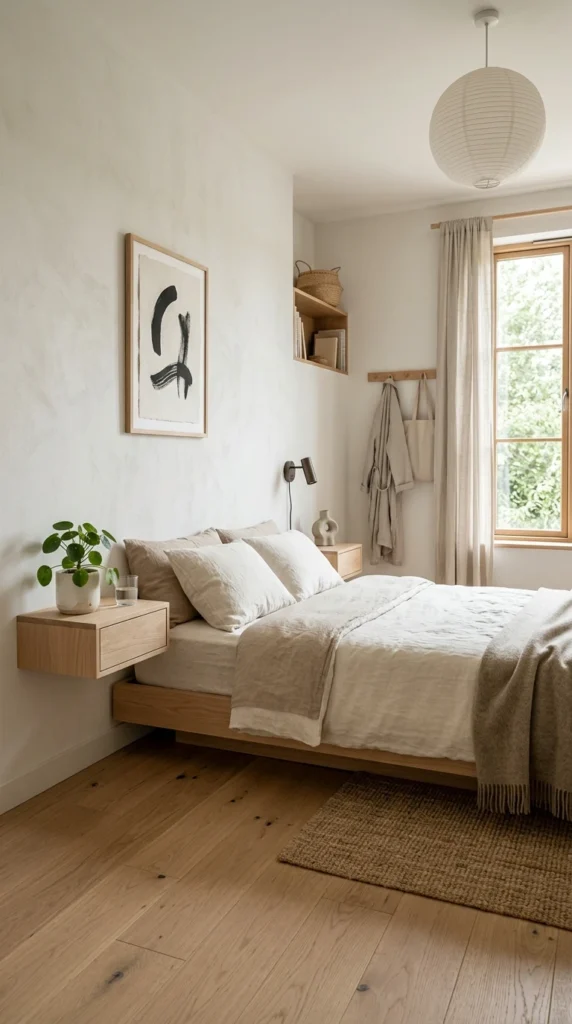
In a small Japandi bedroom, space is optimized with a low bed, floating nightstands, and vertical storage. The layout feels open and breathable, with minimal furniture placed strategically to allow easy movement.
This design works well for apartment dwellers seeking small bedroom decor ideas that feel spacious. Keep furniture multifunctional and avoid overcrowding. Use light colors and mirrors subtly to reflect light and enhance openness while maintaining a calm bedroom aesthetic.
6. Warm Wood Accent Wall Feature
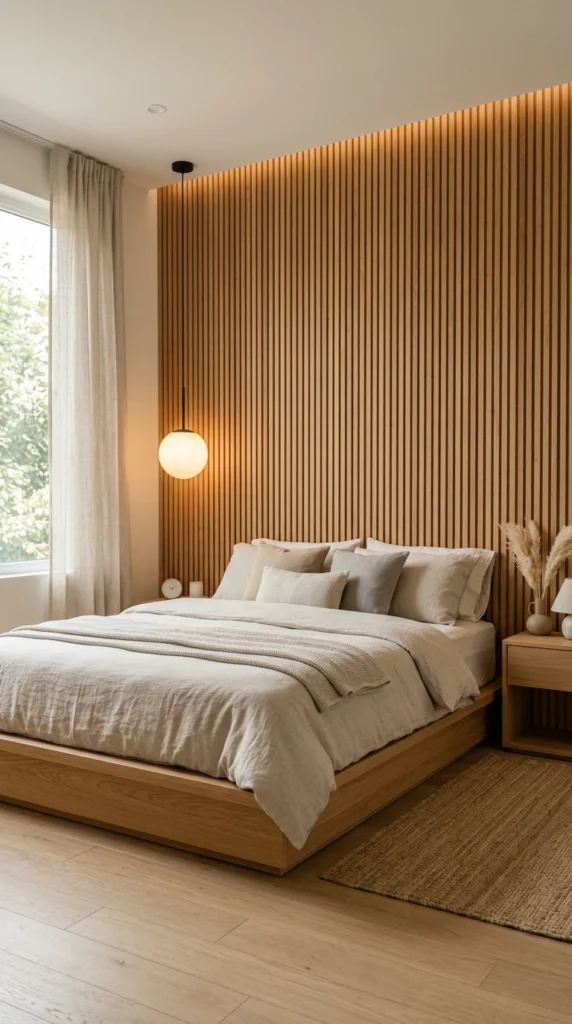
A Japandi bedroom with wood introduces warmth through a vertical slat accent wall behind the bed. The natural grain adds texture while maintaining a minimalist look. Paired with neutral bedding and soft lighting, the room feels grounded and inviting.
This works because it balances minimalism with visual interest. Choose light oak or ash tones and keep surrounding decor simple. Add a single pendant light or ceramic decor piece to enhance the organic modern bedroom Japandi style.
7. Japandi Bedroom with Floor Seating Corner
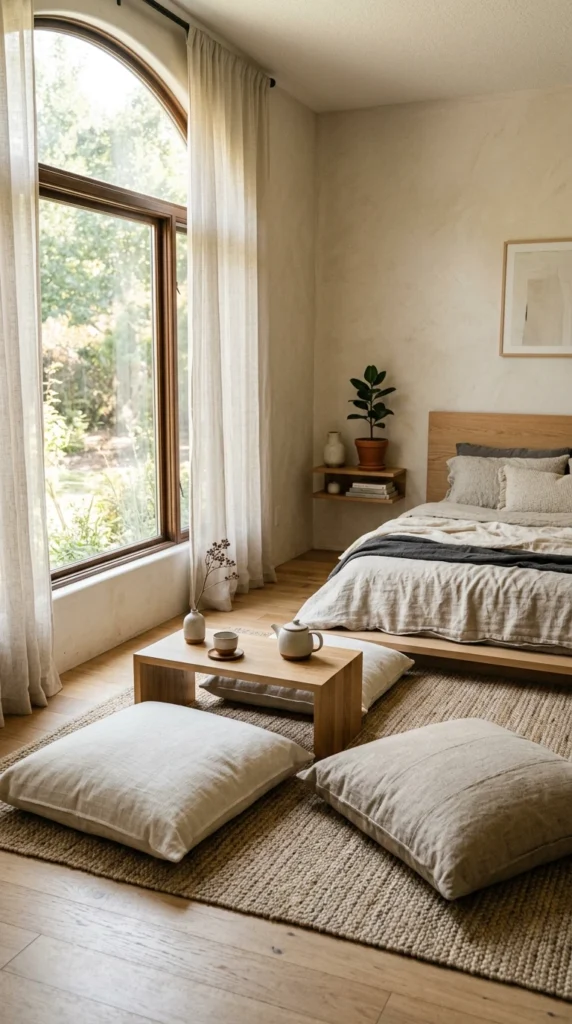
A cozy corner with floor cushions, a low table, and soft textiles creates a peaceful retreat within the bedroom. This Scandinavian Japanese bedroom concept encourages slow living and relaxation.
It works by adding function without cluttering the room. Use linen cushions and neutral tones to keep consistency. Place near a window for natural light and keep decor minimal to maintain a serene, zen-inspired atmosphere.
8. Minimalist Japandi Bedroom with Black Accents
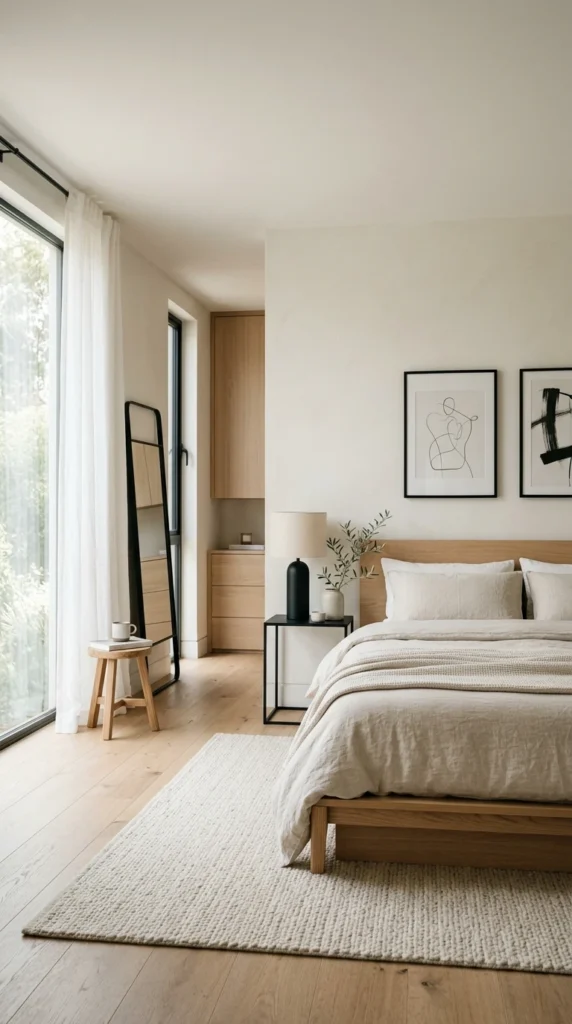
A minimalist Japandi bedroom gains depth through subtle black accents like a lamp base, frame, or side table. The contrast enhances the neutral palette without overpowering the calm aesthetic.
This works because it introduces balance and visual grounding. Keep black elements minimal and pair them with warm wood and soft textiles. This creates a modern Japandi bedroom that feels refined yet approachable.
9. Linen Curtains with Natural Light Focus
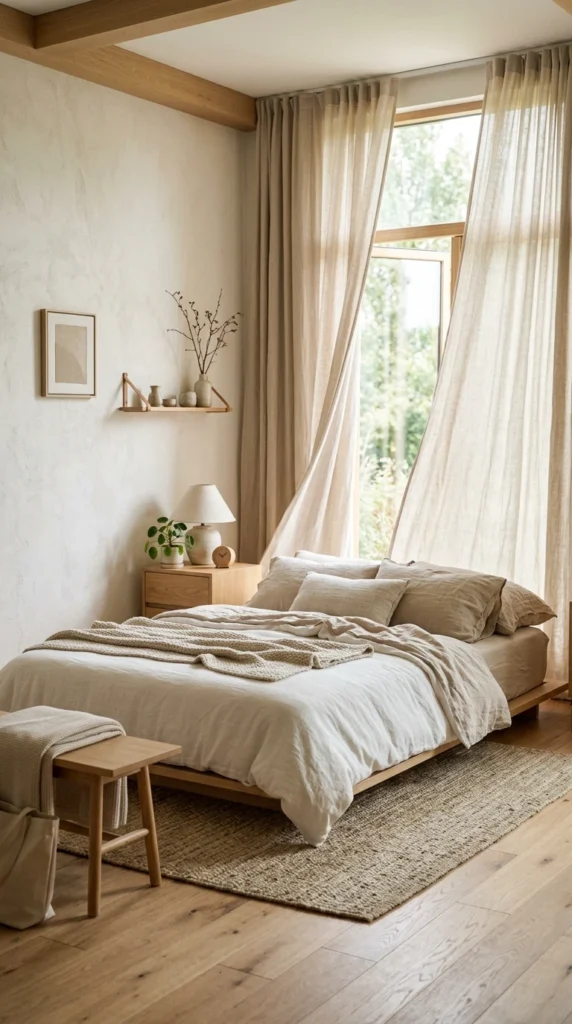
Soft linen curtains allow natural light to filter gently into the room, creating a peaceful and airy environment. The fabric moves slightly with the breeze, adding a lived-in feel.
This works because it enhances the calm bedroom aesthetic while maintaining privacy. Choose off-white or beige curtains and keep window areas uncluttered. This simple change elevates the overall Japandi bedroom inspiration.
10. Japandi Bedroom with Stone Decor Elements
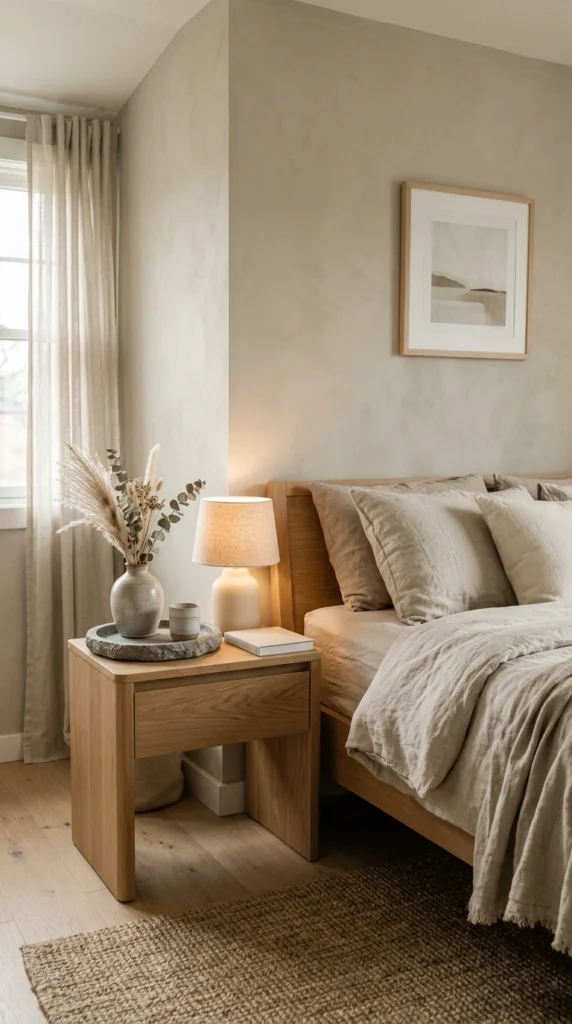
Introducing stone through decor pieces like trays or vases adds subtle texture and grounding energy. Combined with wood and linen, it creates a balanced material palette.
This works because Japandi bedroom textures rely on natural materials. Keep stone elements minimal and neutral. Pair with soft lighting and clean surfaces for a cohesive look.
11. Neutral Rug with Subtle Texture
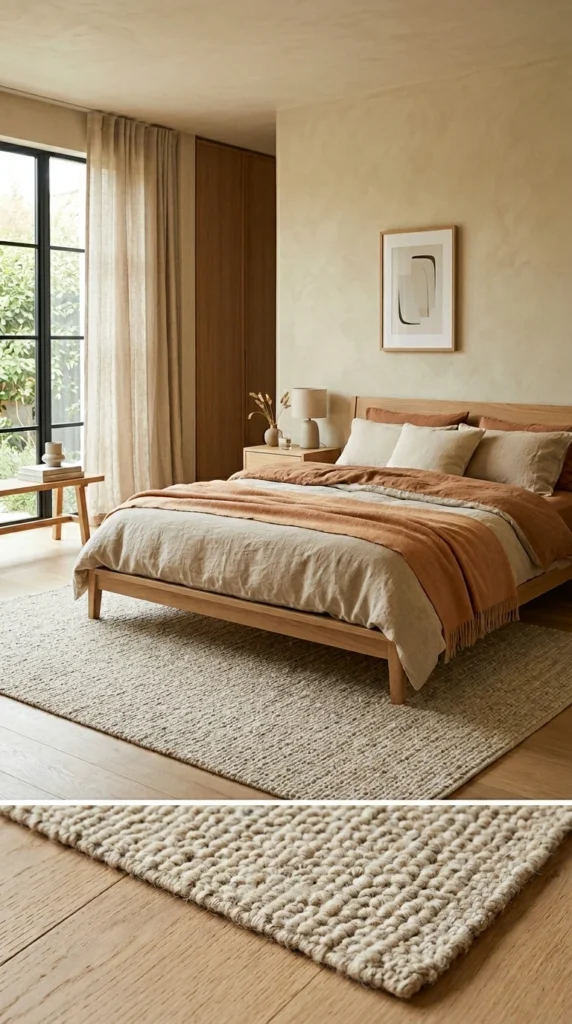
A soft, textured rug in a neutral tone anchors the room while adding warmth underfoot. It complements the wooden furniture and linen bedding seamlessly.
This works because it adds comfort without disrupting the minimalist bedroom ideas. Choose a low-pile rug in beige or gray and keep patterns subtle. Position it partially under the bed for balance.
12. Japandi Bedroom with Floating Shelves
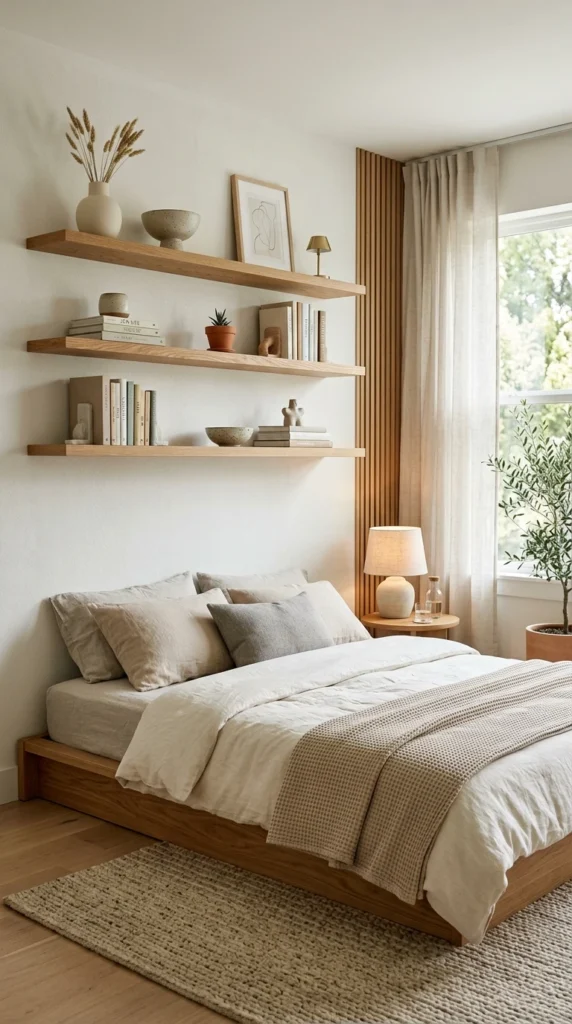
Floating shelves display a few curated decor items like books, ceramics, or small plants. The arrangement feels intentional and uncluttered.
This works because it combines storage with aesthetics. Limit items to avoid overcrowding and maintain a decluttered bedroom design. Stick to neutral tones for cohesion.
13. Cozy Japandi Bedroom with Layered Lighting
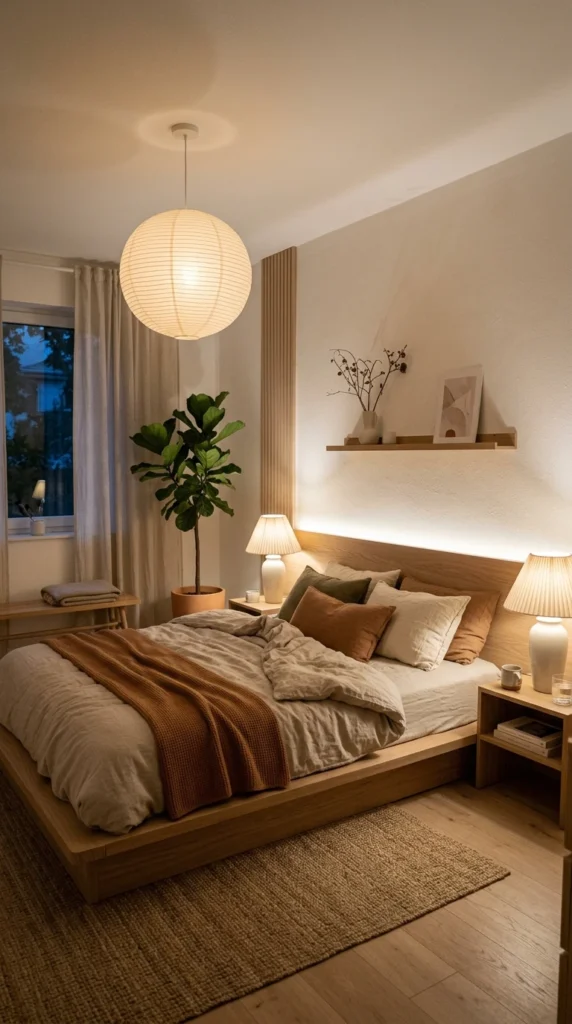
Multiple light sources such as bedside lamps, floor lamps, and soft overhead lighting create a warm ambiance. Each layer adds depth and comfort.
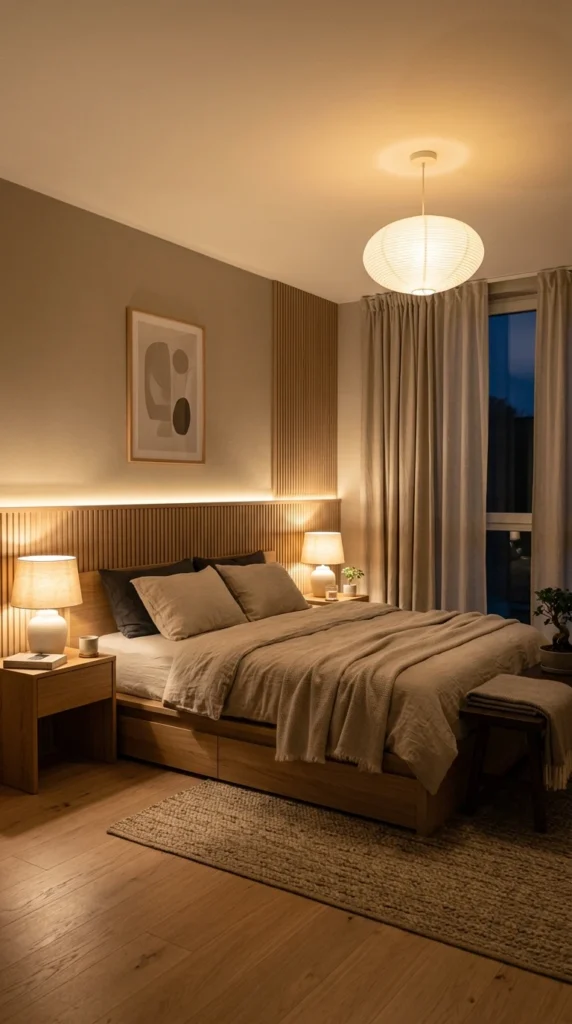
This works because lighting defines mood in Japandi bedroom design. Use warm tones and keep fixtures simple. Avoid bright, harsh lights to maintain a cozy neutral bedroom feel.
14. Japandi Bedroom with Sliding Panels
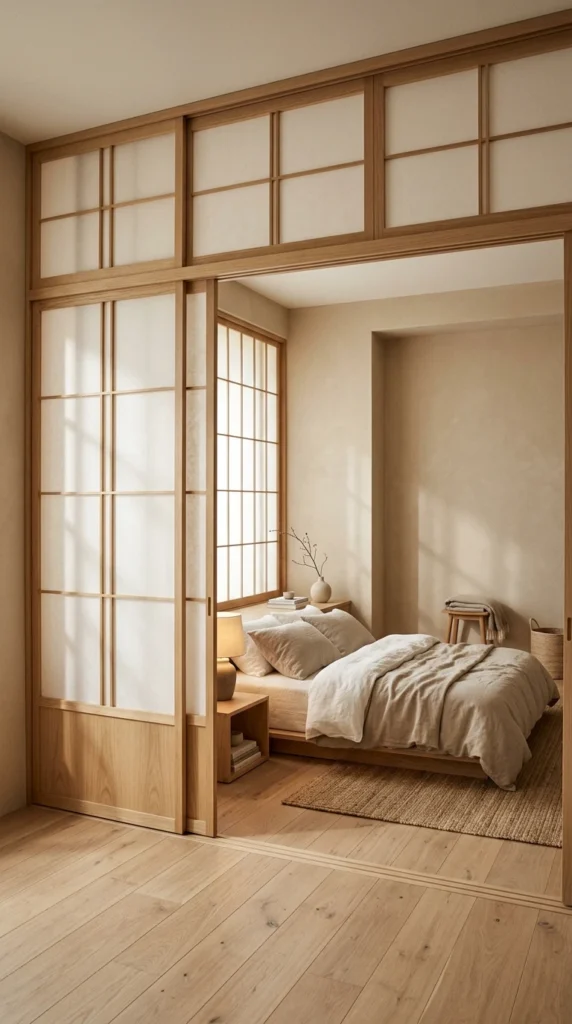
A refined Japandi bedroom design comes to life with sliding panels crafted from light wood frames and soft paper or fabric inserts, creating a serene division between spaces without closing them off completely. The panels glide effortlessly, revealing a low platform bed dressed in warm neutral linen, a soft woven rug underfoot, and a single ceramic lamp casting a diffused glow. The overall palette leans into beige, soft taupe, and off-white tones, allowing the clean lines of the panels to define the architecture while maintaining a calm, uncluttered bedroom environment.
This layout works because it blends functionality with visual simplicity, a core principle of Japandi bedroom ideas. Sliding panels save space while adding a subtle Japanese influence that enhances the room’s flow. For a cohesive look, match the panel wood tone with your bed frame or flooring, and keep nearby decor minimal to avoid visual noise. If you want a more modern Japandi bedroom feel, consider semi-transparent panels to allow soft light to pass through while still maintaining privacy.
15. Japandi Bedroom with Indoor Plant Accent
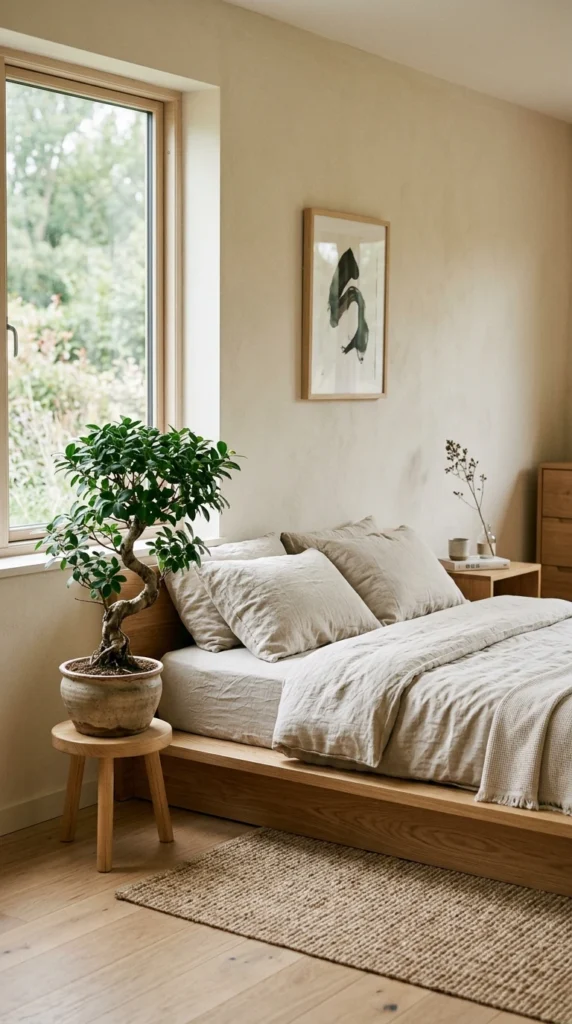
A thoughtfully styled Japandi aesthetic bedroom often includes a single indoor plant placed with intention, such as a sculptural bonsai on a low wooden stand or an olive tree in a matte ceramic pot near a sunlit corner. The greenery contrasts gently against a neutral Japandi bedroom color palette of soft beige walls, linen bedding, and light oak furniture, bringing life into the space without disrupting its calm rhythm. Natural light enhances the plant’s presence, creating a peaceful, organic focal point.
This approach works because Japandi bedroom inspiration is deeply connected to nature, but always in a restrained, intentional way. One well-chosen plant adds warmth and movement while maintaining a decluttered bedroom design. Choose simple, earthy planters in stone or clay tones and avoid glossy finishes. Place the plant where it can breathe visually, such as beside the bed or near a window, and keep surrounding decor minimal to preserve that serene, cozy neutral bedroom feel.
16. Minimal Nightstand Styling
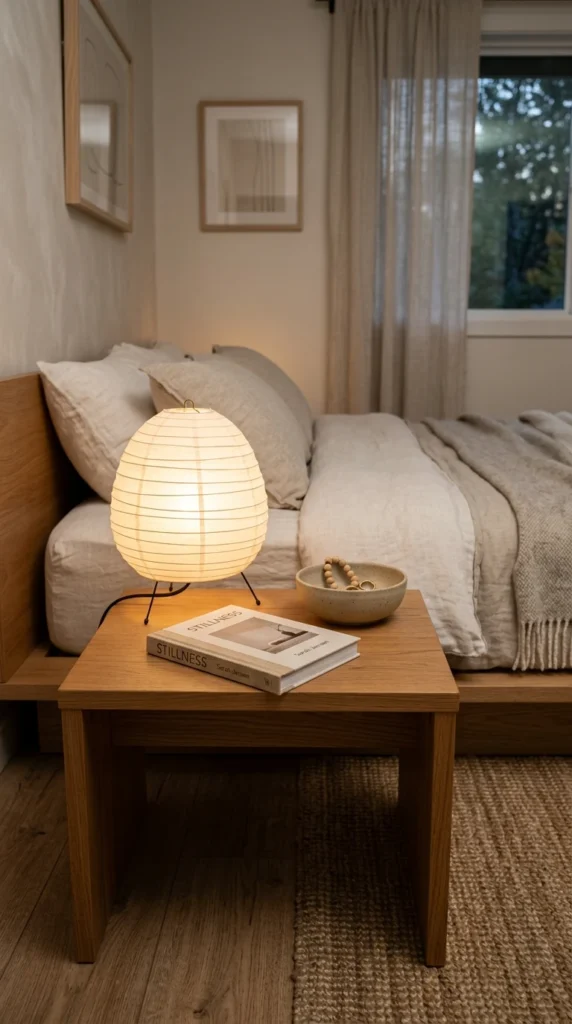
In a minimalist Japandi bedroom, the nightstand becomes a quiet reflection of intentional living, featuring only a few carefully chosen elements. A light wood nightstand sits beside a low bed, holding a soft-glow paper lamp, a single book, and a small ceramic bowl. The surface remains mostly empty, allowing textures like linen bedding and a neutral rug to take visual priority while maintaining a calm bedroom aesthetic.
This works because Japandi bedroom decor focuses on clarity and purpose, eliminating unnecessary clutter while keeping essentials accessible. To achieve this look, choose nightstands with clean lines and natural finishes, and limit styling to items you actually use. Keep color tones cohesive, such as warm beige, soft gray, or muted taupe, to maintain harmony. If you want to elevate the space, add one subtle decorative piece like a handcrafted object, but leave enough negative space to preserve that peaceful, decluttered bedroom design.
17. Japandi Bedroom with Textured Throw Blanket
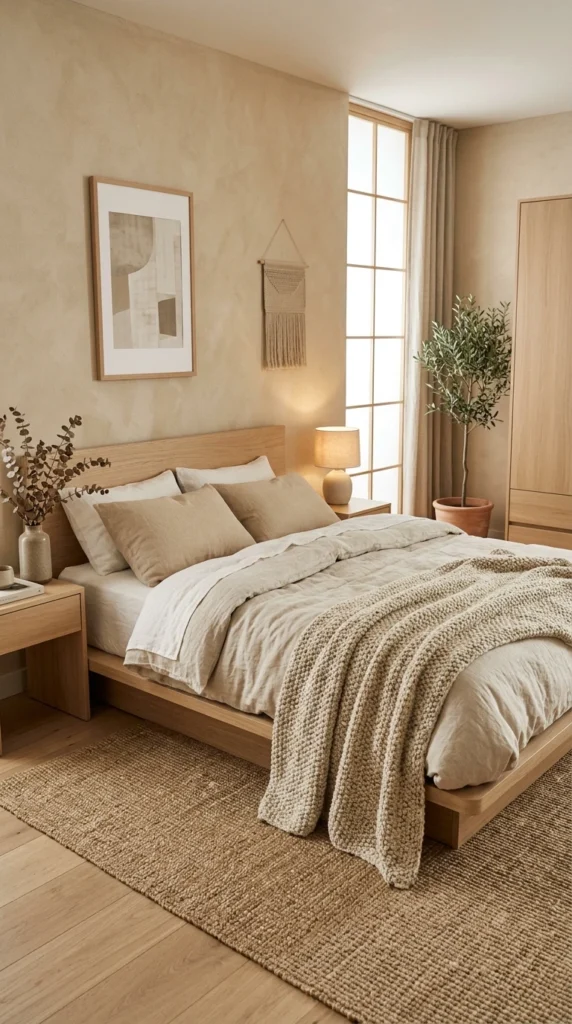
A warm minimal bedroom instantly feels more inviting with a textured throw blanket casually draped across the foot of the bed. Imagine soft linen bedding in off-white layered with a chunky knit or woven cotton throw in a muted sand or clay tone, adding depth without overwhelming the simplicity of the space. The surrounding room remains uncluttered, with light wood furniture and soft natural lighting enhancing the tactile quality of the materials.
This works because Japandi bedroom textures rely on layering subtle elements rather than bold contrasts. A single throw introduces warmth and visual interest while keeping the overall design calm and refined. Choose natural fabrics like wool, linen, or organic cotton, and avoid overly bright colors or heavy patterns. For best styling, let the throw fall naturally rather than folding it perfectly, creating that effortless, cozy minimalist bedroom look that feels both lived-in and elevated.
18. Japandi Bedroom with Neutral Artwork Gallery
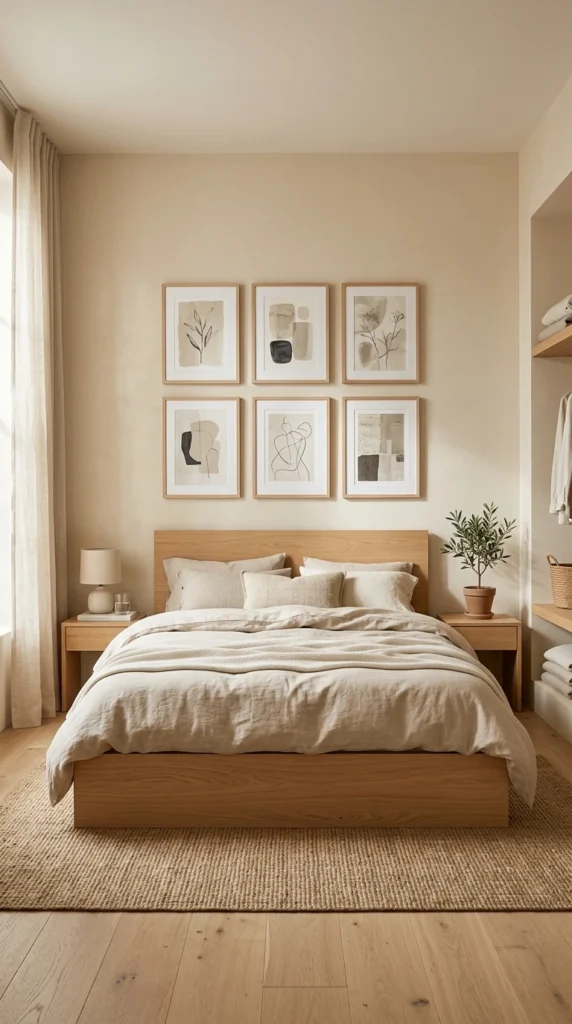
A curated gallery wall in a Japandi style bedroom features a small collection of neutral-toned artwork arranged with precision and balance. Think abstract line drawings, soft landscape prints, or textured canvas pieces in shades of charcoal, sand, and off-white, framed in thin light wood or matte black frames. The wall remains mostly open, allowing each piece to breathe while complementing the overall calm bedroom aesthetic.
This works because it adds personality without disrupting the minimalist Japandi bedroom design. Instead of filling the wall, focus on spacing and alignment to create a sense of order and calm. Stick to a limited color palette and consistent frame style to maintain cohesion. For a more organic modern bedroom Japandi feel, mix one slightly larger piece with smaller ones, ensuring the arrangement feels intentional rather than crowded.
19. Japandi Bedroom with Built-In Storage
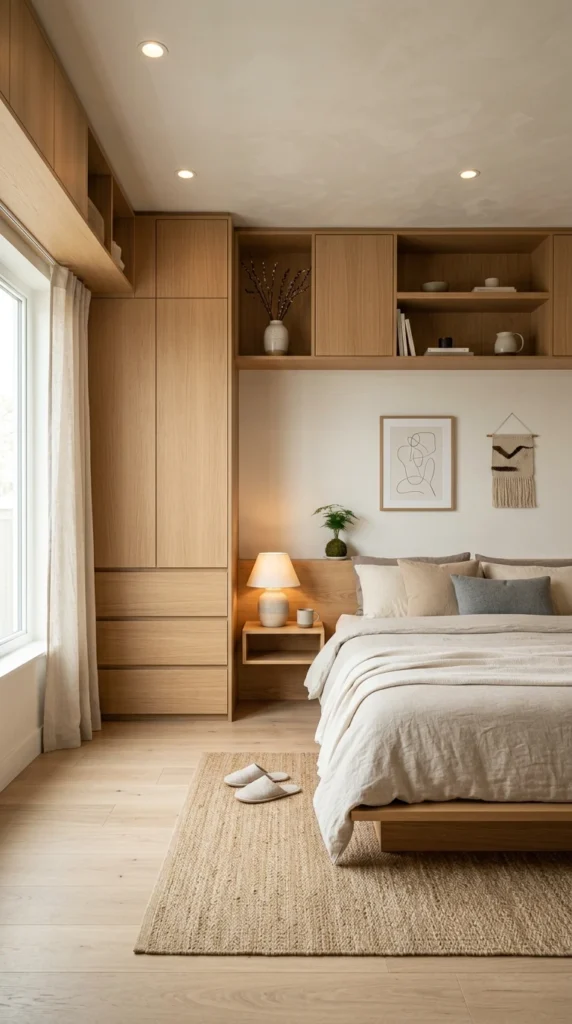
A modern Japandi bedroom embraces built-in storage that blends seamlessly into the architecture, such as wall-integrated wardrobes or under-bed drawers in matching wood tones. The design keeps surfaces clean and uninterrupted, with hidden compartments storing clothing, bedding, and essentials out of sight. The room features a low bed, soft neutral textiles, and minimal decor, creating a space that feels open and effortlessly organized.
This works because decluttered bedroom design is essential to Japandi bedroom ideas, allowing the mind to relax in a visually शांत environment. Built-in storage maximizes functionality while maintaining aesthetic simplicity. Choose finishes that match your walls or furniture for a cohesive look, and avoid visible handles by opting for push-to-open designs. Keep only a few decorative items on display to maintain that calm, luxury minimalist bedroom feel.
20. Japandi Bedroom with Soft Gray Palette
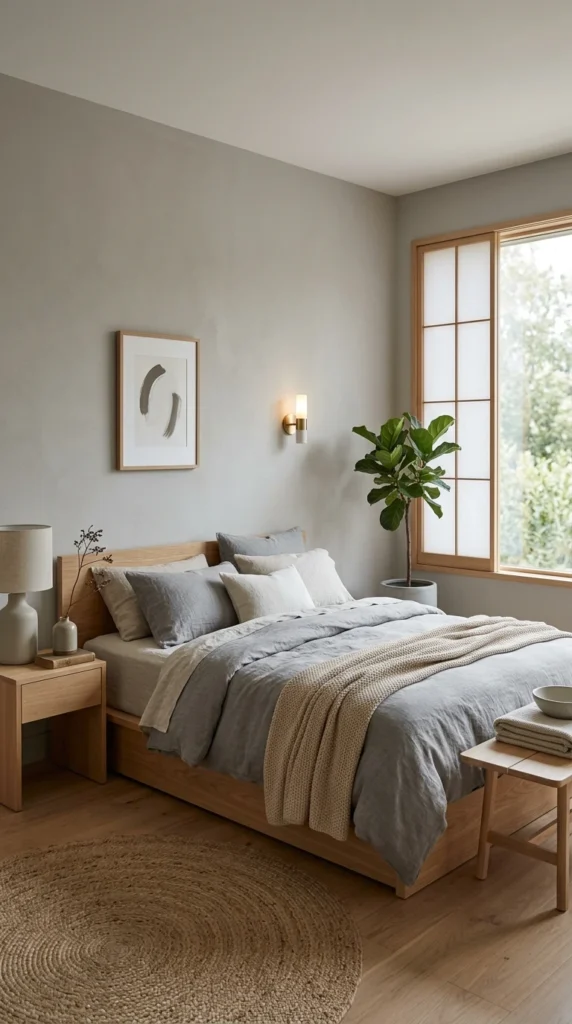
A soft gray Japandi bedroom creates a serene and modern atmosphere by layering shades of warm gray with natural textures. The walls are painted in a muted gray tone, complemented by linen bedding in lighter hues and accented with light wood furniture. Soft lighting from a paper lamp or bedside fixture adds warmth, preventing the palette from feeling cold or flat.
This approach works because gray introduces subtle depth while maintaining a neutral Japandi bedroom color palette. To keep the space cozy, balance gray with warm materials like oak, cotton, and woven textiles. Avoid overly cool or blue-toned grays, and instead opt for warmer undertones. Add a single contrasting element, such as a darker gray cushion or textured rug, to create dimension while preserving the calm bedroom aesthetic.
21. Japandi Bedroom with Minimal Desk Setup
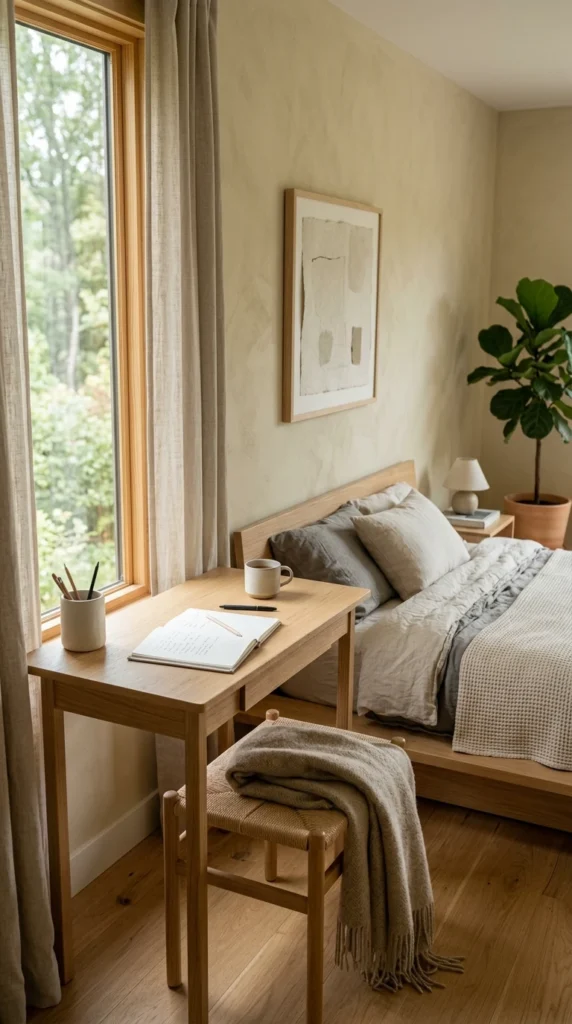
A Japandi interior bedroom can seamlessly incorporate a small desk setup without disrupting its calm aesthetic. A slim wooden desk with clean lines sits near a window, paired with a simple chair and minimal accessories like a ceramic pen holder and a neutral notebook. The surrounding space remains uncluttered, with soft natural light enhancing the workspace.
This works because functionality is integrated thoughtfully within Japandi bedroom design. A minimal desk setup supports productivity while maintaining visual harmony. Keep the surface clear and limit decor to essentials, ensuring the space doesn’t feel busy. Choose materials that match the rest of the room, such as light wood and neutral fabrics, to create a cohesive modern bedroom setup that feels intentional and शांत.
22. Japandi Bedroom with Open Floor Space
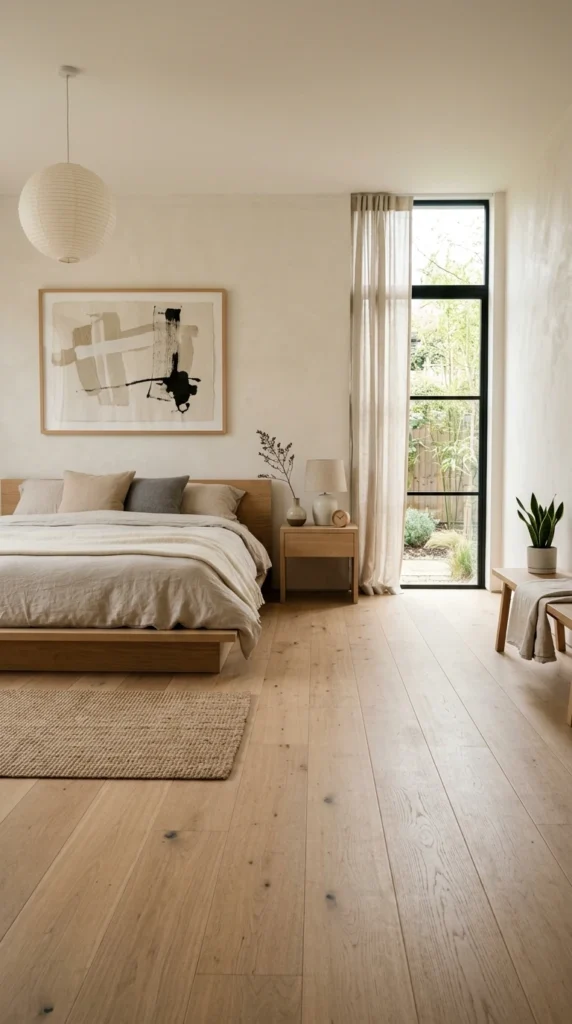
An open, airy layout defines a minimalist Japandi bedroom where furniture is kept to a minimum, allowing generous floor space to remain visible. A low bed, a single nightstand, and perhaps a soft rug are all that occupy the room, creating a sense of calm and freedom. The neutral palette and natural materials enhance the feeling of spaciousness.
This works because negative space is a powerful design element in Japandi bedroom ideas, giving the eye room to rest and the mind space to relax. Avoid filling every corner, and instead focus on intentional placement of a few key pieces. Use light tones and natural textures to maintain warmth while keeping the layout uncluttered. This approach is especially effective for small bedroom decor, making the room feel larger and more serene.
23. Japandi Bedroom with Light Wood Furniture Set
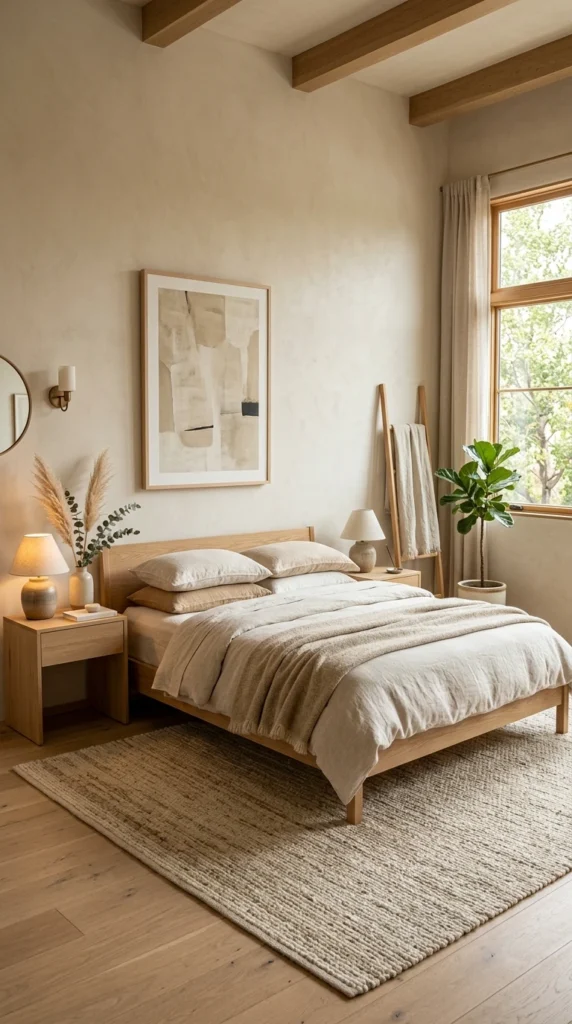
A cohesive Japandi bedroom design often features a matching set of light wood furniture, including a bed frame, nightstands, and dresser in soft oak or ash tones. The uniformity creates a harmonious visual flow, complemented by linen bedding, neutral walls, and subtle decor accents. The overall look feels balanced, calm, and effortlessly elegant.
This works because consistency in materials enhances the sense of order and simplicity in a neutral Japandi bedroom. Avoid mixing too many finishes, and instead focus on one dominant wood tone to anchor the space. Pair it with soft textiles and minimal decor to maintain that warm minimal bedroom feel. For added depth, introduce a single contrasting element like a darker accent piece, but keep the overall palette cohesive.
24. Japandi Bedroom with Soft Beige Walls
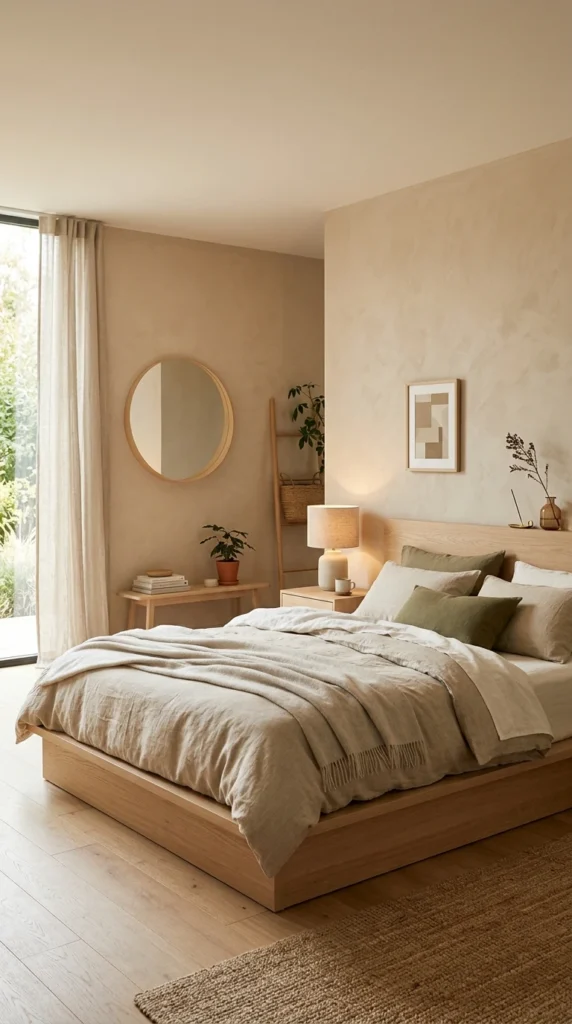
Soft beige walls form the perfect backdrop for a Japandi aesthetic bedroom, creating warmth without overwhelming the senses. The walls reflect natural light beautifully, enhancing the textures of linen bedding, wooden furniture, and subtle decor elements. The space feels inviting, calm, and grounded in natural tones.
This works because beige is a key element in the Japandi bedroom color palette, offering a neutral base that supports layering. Choose warm undertones rather than cool shades to maintain a cozy neutral bedroom feel. Keep wall decor minimal, allowing the color itself to define the mood. Pair with light wood and soft textiles to create a cohesive, organic modern bedroom Japandi look.
25. Japandi Bedroom with Ceramic Decor Accents
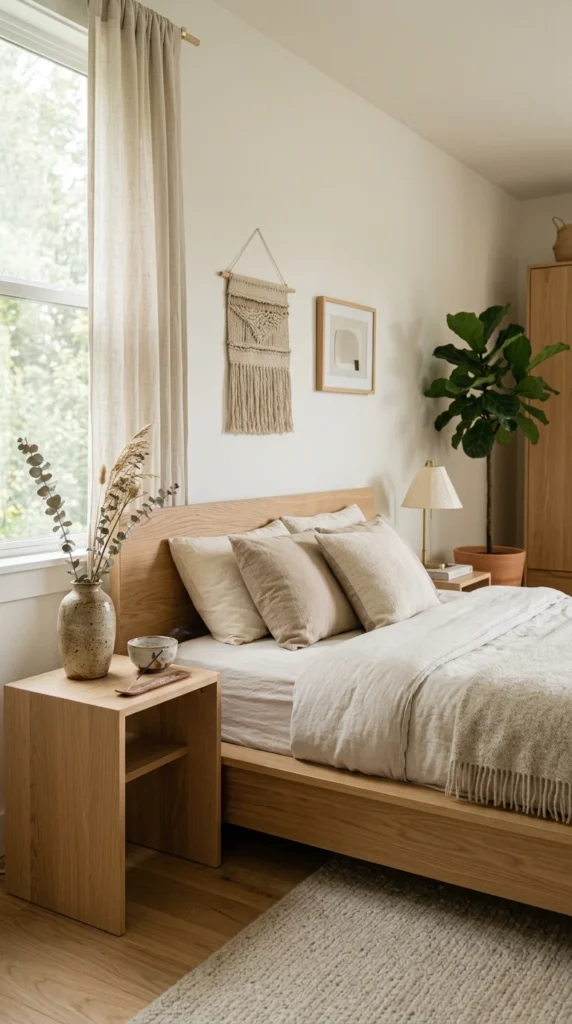
Handcrafted ceramic accents bring quiet character to a Japandi bedroom, appearing as small vases, bowls, or sculptural pieces placed intentionally on shelves or nightstands. Their imperfect shapes and matte finishes add texture while complementing the natural palette of wood, linen, and stone.
This works because Japandi bedroom decor values authenticity and subtle detail over perfection. Choose pieces in earthy tones like clay, off-white, or soft gray, and limit the number to avoid clutter. Position them where they can stand out without competing with other elements, such as on a floating shelf or beside the bed. This creates a refined, cozy minimalist bedroom atmosphere with a personal touch.
26. Japandi Bedroom with Minimal Headboard Design
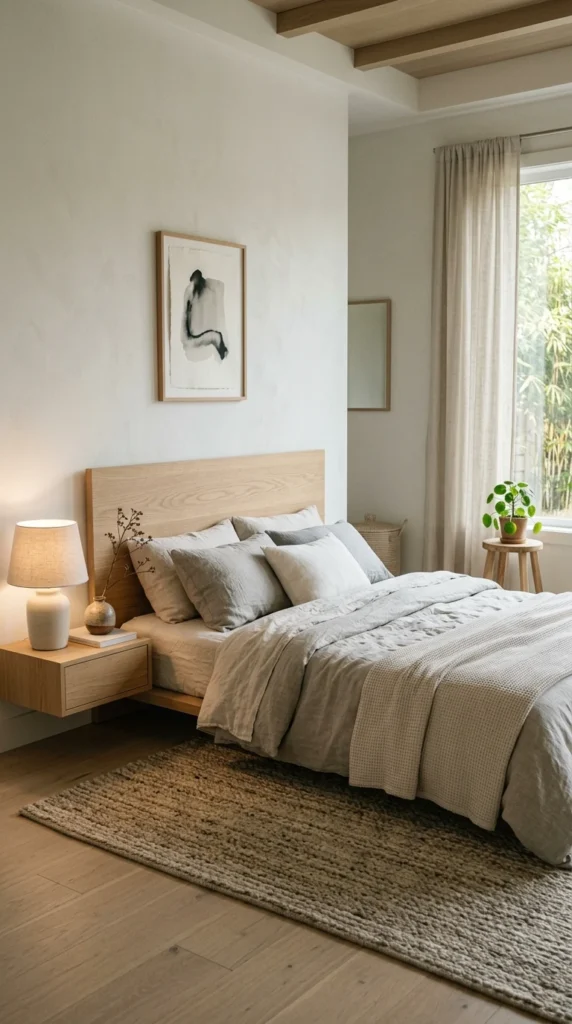
A minimal headboard in a Japandi style bedroom features clean lines and understated materials, such as a simple wooden panel or a softly upholstered neutral fabric. It blends seamlessly with the low bed and surrounding decor, allowing the overall composition to feel calm and cohesive.
This works because it eliminates unnecessary visual weight while still providing comfort and structure. Choose a headboard in light wood or muted fabric tones to match the room’s palette. Avoid ornate designs or bold colors, and instead focus on simplicity. Pair with soft bedding and minimal decor to maintain a luxury minimalist bedroom feel that is both elegant and restful.
27. Japandi Bedroom with Soft Layered Curtains
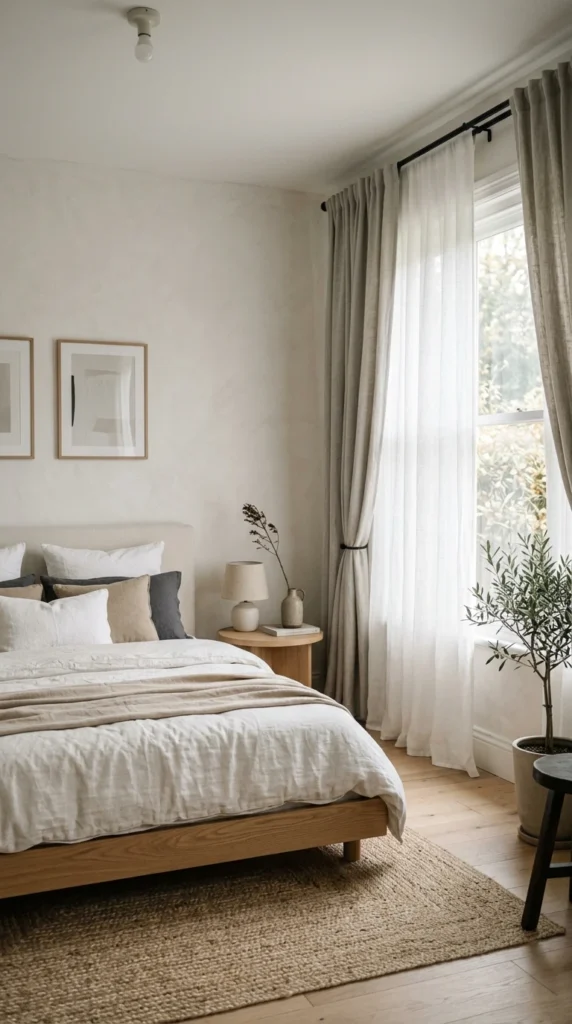
Layered curtains in a Japandi bedroom combine sheer linen panels with slightly heavier fabric drapes, creating depth and flexibility in light control. During the day, soft natural light filters through the sheer layer, while the outer layer adds privacy and warmth when needed.
This works because it enhances both functionality and atmosphere in a calm bedroom aesthetic. Stick to neutral tones like off-white, beige, or soft gray to maintain consistency with the Japandi bedroom color palette. Hang curtains high and let them fall naturally to elongate the space. This subtle layering adds softness and elegance without disrupting the minimalist design.
28. Japandi Bedroom with Subtle Pattern Textiles
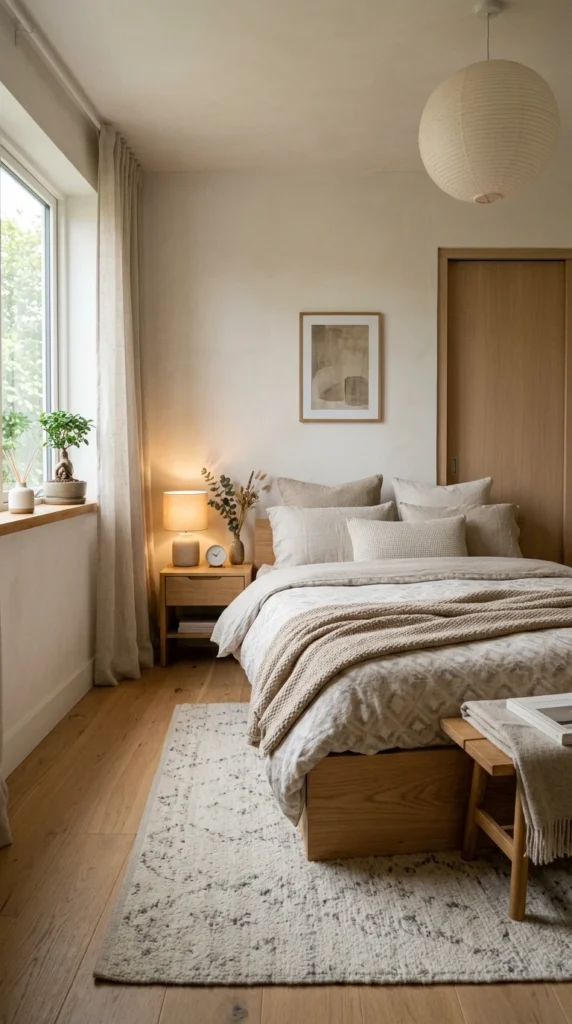
A Japandi bedroom can incorporate subtle patterns through textiles like bedding or rugs, featuring soft geometric or organic designs in muted tones. These patterns add quiet visual interest while maintaining the overall simplicity of the space.
This works because it introduces variation without overwhelming the minimalist Japandi bedroom design. Choose low-contrast patterns in neutral shades like sand, gray, or taupe, and pair them with solid elements to maintain balance. Limit patterned pieces to one or two areas, such as a rug or duvet, to keep the look cohesive and uncluttered.
29. Japandi Bedroom on a Budget
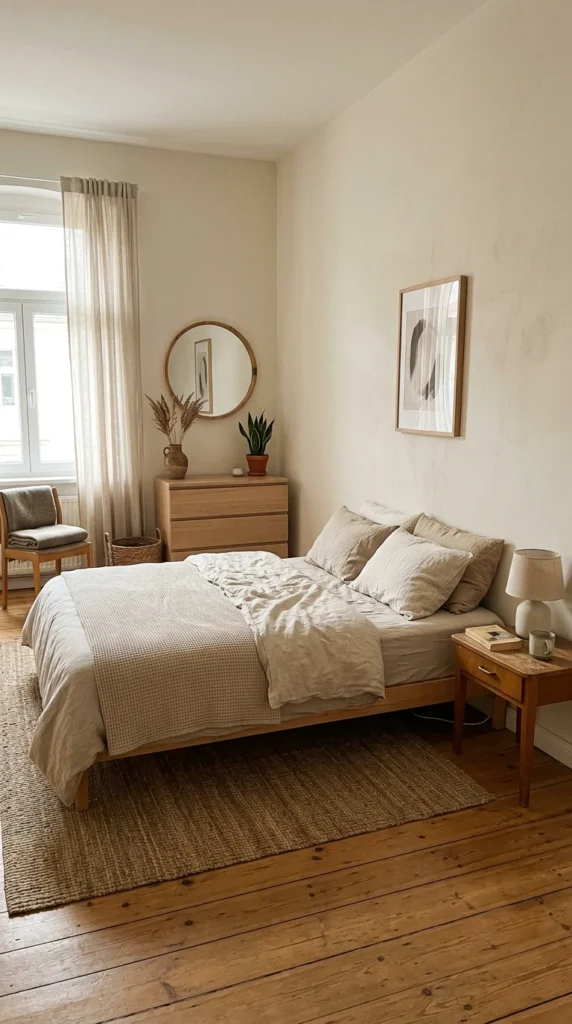
A budget-friendly Japandi bedroom focuses on simplicity and intentional choices rather than expensive items. A basic low bed frame, neutral bedding, and a few carefully selected decor pieces create a clean and calming environment. Thrifted wooden furniture and DIY elements can enhance the look while staying affordable.
This works because Japandi bedroom ideas prioritize minimalism and quality over quantity. Choose versatile pieces in neutral tones and avoid unnecessary purchases. Repurpose existing furniture with a fresh coat of paint or new textiles to match the aesthetic. Keep decor minimal and focus on creating a cozy, decluttered bedroom design that feels both stylish and accessible.
30. Japandi Bedroom with Seasonal Styling
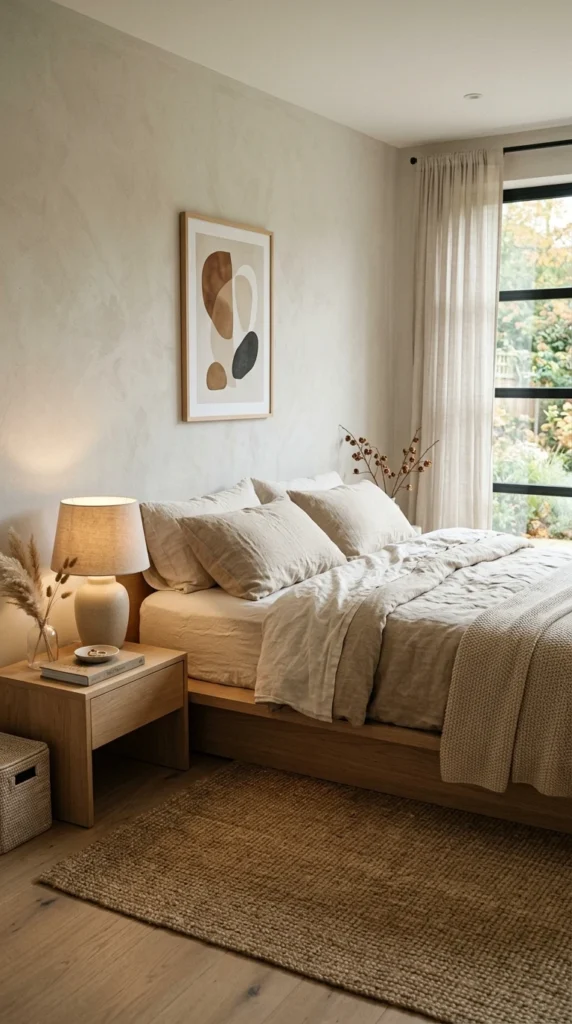
A Japandi bedroom adapts beautifully to seasonal changes by swapping out small elements like textiles and decor. In warmer months, lightweight linen bedding and airy curtains create a fresh, breathable feel, while cooler seasons introduce thicker throws and warmer tones for added comfort.
This works because it allows the space to evolve without losing its core identity. Keep the base design neutral and consistent, and update only a few key pieces to reflect the season. Choose natural materials and muted colors to maintain harmony. This approach keeps your Japandi bedroom inspiration feeling fresh, cozy, and aligned with a calm, intentional lifestyle.